
SWOT analysis: how to separate facts from feelings
Born in the 1960s in a Stanford project funded by the Fortune 500, SWOT is not meant to make a list — it is meant to distinguish what depends on you from what does not. But only if the boxes are filled with data, not impressions.
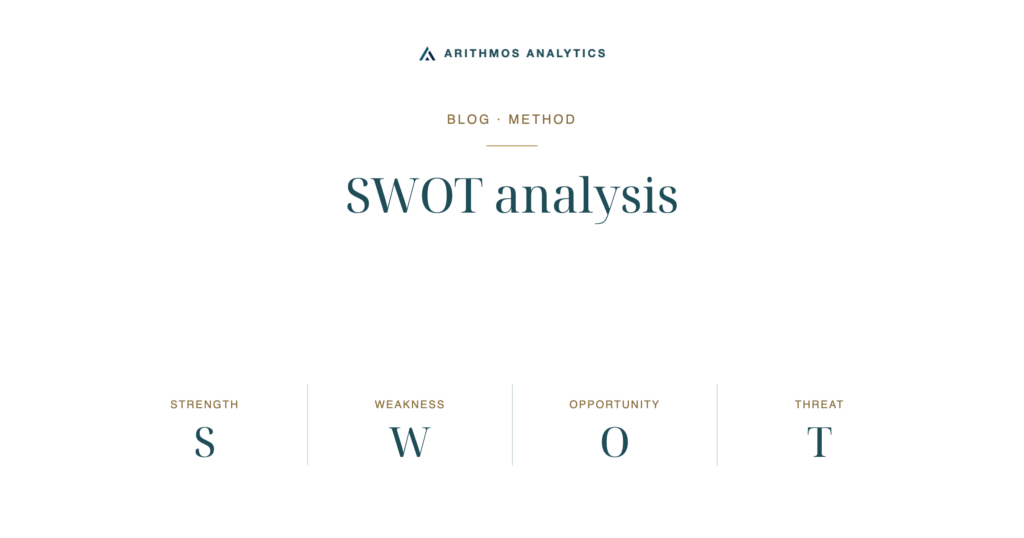
Between 1960 and 1970, a group of researchers at the Stanford Research Institute was working on a project funded by Fortune 500 companies. The question was simple: why did business planning, even in large companies, fail so often?
Led by Albert Humphrey, with a team that included Robert Stewart, Marion Dosher and Otis Benepe, the group developed a tool that was initially called SOFT: what is going well today (Satisfactory), what could go well tomorrow (Opportunity), what is not going well today (Fault), what risks not going well tomorrow (Threat). In 1964, at a seminar in Zurich, two consultants — Urick and Orr — changed the F of “Fault” into the W of “Weakness”, and the name we know today was born: SWOT.
How it works
Information is divided into four boxes. Two concern the inside of the company: strengths (what you do well) and weaknesses (what you lack or what does not work). Two concern the outside: opportunities (what could help you grow) and threats (what could harm you).
Why it is useful, and where people usually go wrong
The value of SWOT is not the list itself. It is the discipline of separating “what depends on me” from “what happens around me” — two types of problems that require completely different answers. A weakness is corrected internally. An external threat can only be anticipated or mitigated, not eliminated.
The most common mistake: filling the boxes with impressions instead of verifiable data. “We are good at customer service” is an opinion. “90% of customers come back within three months” is a fact. Only the second version really helps you decide.
A question for anyone running a small business: was the last SWOT you did (if you did one) based on numbers, or on feelings?
Sources: Stanford Research Institute (Humphrey, 2005), RapidBI, ScienceDirect — Journal of Management History.